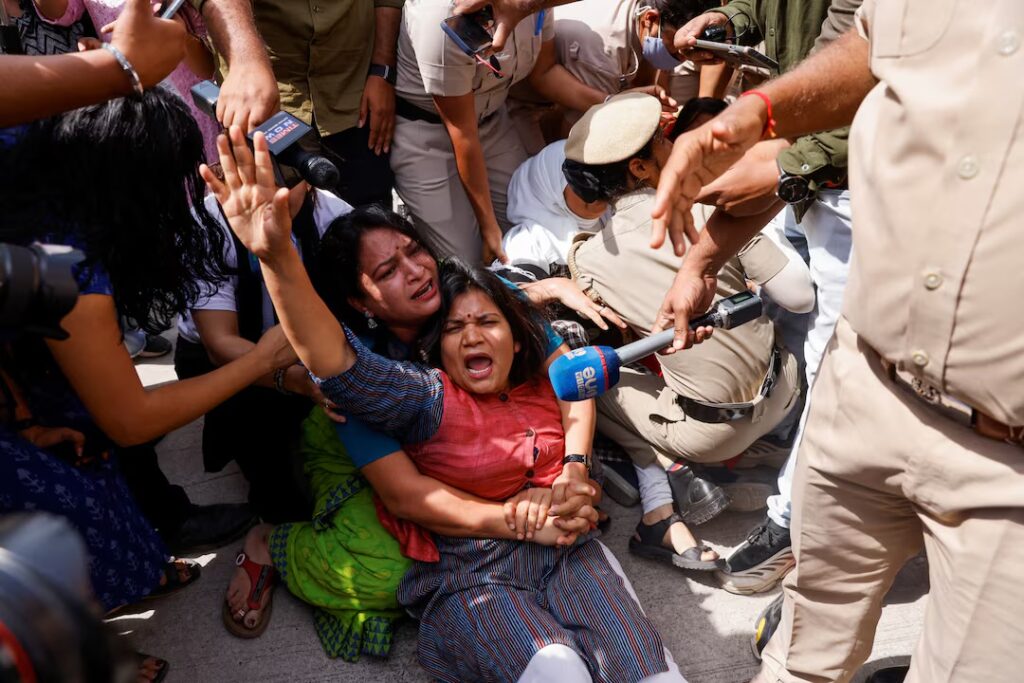
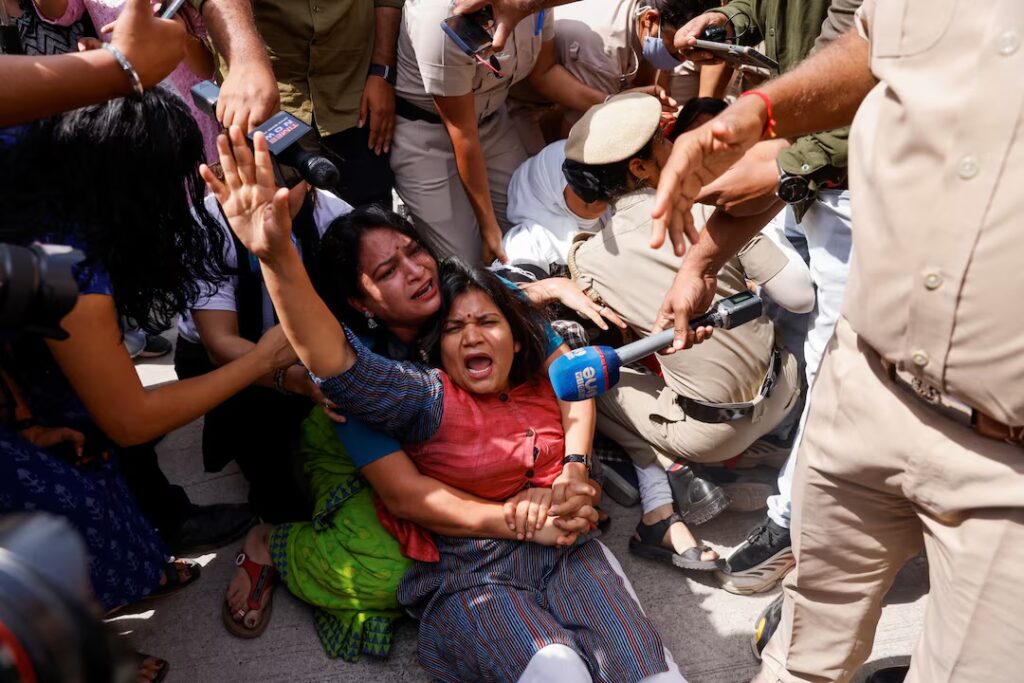
On October 10, 2026, the streets of New Delhi witnessed disturbing scenes that every citizen who values democracy and constitutional rights should examine closely.
Thousands of citizens attempted to raise their voices against alleged electoral irregularities and demanded accountability from Chief Election Commissioner Gyanesh Kumar. Instead of being allowed to express their grievances peacefully, large numbers were detained by Delhi Police.
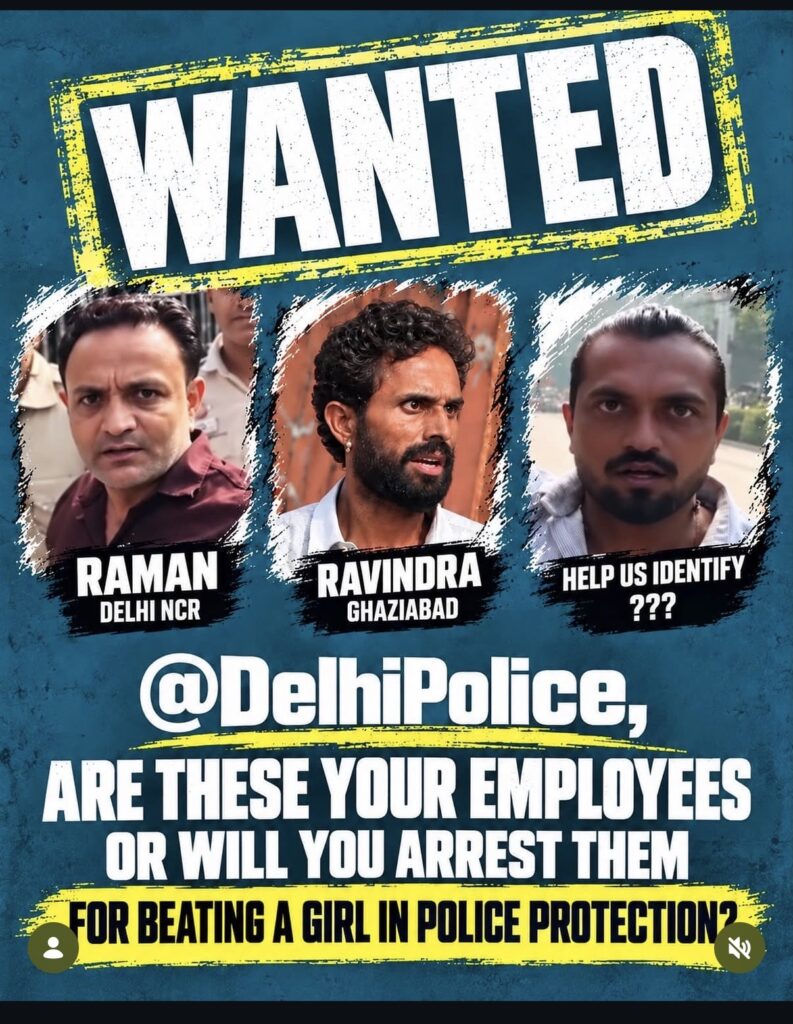
Even more disturbing, videos circulating from the demonstrations showed groups of men physically attacking protesters, including young people, while police personnel were present nearby.
The question is simple: When citizens are attacked in front of police officers, why are they not immediately protected?
A Police Uniform Is a Responsibility, Not a License for Selective Enforcement
The Indian Constitution does not give police officers the authority to decide whose rights deserve protection based on political ideology.
Article 14 guarantees equality before the law. Article 19 protects freedom of expression and peaceful assembly, subject to lawful and reasonable restrictions.
Yet the events in Delhi raise troubling questions about whether those principles were respected.
While police detained people attempting to participate in demonstrations, disturbing footage showed protesters being punched, kicked and physically manhandled.
The Cockroach Janta Party has accused BJP-RSS supporters of carrying out these assaults. Police have since arrested four men who reportedly claim affiliation with the Hindu Raksha Dal. The political connections of those responsible must be thoroughly and independently investigated rather than assumed.
But regardless of the attackers’ affiliations, the fundamental question remains: Why did violence apparently continue in the presence of police personnel?
A police force that acts immediately against demonstrators but fails to intervene promptly against physical violence invites serious questions about impartiality and accountability.
The BJP Government Must Answer for the Treatment of Protesters
The BJP-led central government frequently emphasizes India’s status as the world’s largest democracy.
But democracy cannot be measured merely by elections or speeches delivered from political platforms.
It must also be measured by how a government treats people who disagree with it.
Citizens have raised serious allegations concerning electoral roll revisions and the functioning of the Election Commission. The BJP and Election Commission have denied wrongdoing.
Those disagreements should be addressed through transparency, evidence, judicial oversight and public debate—not through unnecessary detention or intimidation.
The events of October 10 demand answers from the political leadership responsible for public order in the national capital.
Why were thousands detained? Were the restrictions proportionate and lawful? Were officers instructed to protect peaceful protesters from counter-protesters? Why did the recorded assaults appear to continue with police nearby?
The arrests announced on October 11 are an important development, but arrests alone do not settle whether officers performed their duties properly at the scene.
The government must explain both the treatment of peaceful demonstrators and the apparent failures to prevent violence.
As a Sikh Political Activist, I Cannot Remain Silent
As a member of Shiromani Akali Dal (Amritsar), I believe that speaking against injustice, questioning government authority and defending civil liberties are essential responsibilities in a democratic society.
The Sikh community has a long and painful history of confronting questions of state power, political discrimination and the protection of fundamental rights.
That history makes the treatment of peaceful protesters deeply concerning to me.
When state institutions appear to treat political dissent as a threat rather than a constitutional right, every minority community and every political opposition movement has reason to demand accountability.
Today, these questions concern protesters challenging the Election Commission.
Tomorrow, similar questions may concern farmers, students, journalists, Sikh activists, human-rights defenders or any ordinary citizen who challenges those in power.
Constitutional rights mean very little if they are protected only when citizens agree with the government.
The Cameras Have Recorded the Violence. Now Accountability Must Follow.
In the age of smartphones and social media, allegations of police inaction can be examined against recorded evidence.
Videos from Delhi show physical assaults that cannot simply be dismissed as routine political disagreement.
Four arrests have now been reported. That is a necessary beginning, not the end of accountability.
The public deserves an impartial investigation establishing who organized or participated in the violence, whether any political organization was involved, what nearby police officers did or failed to do, and whether disciplinary or criminal proceedings against additional individuals are warranted.
All relevant camera footage should be preserved, witnesses should be protected, and the findings should be made public.
Police officers who act lawfully deserve support. Those who fail to protect people from violence must face appropriate scrutiny regardless of their rank.
Democracy Cannot Survive Through Fear and Silence
A country cannot claim to uphold freedom while treating legitimate dissent as an enemy.
A political party cannot claim to respect constitutional democracy while ignoring credible allegations of violence committed against its opponents.
And a police institution cannot maintain public trust unless it applies the law equally.
The events of October 10 should not be forgotten when the news cycle moves on. They require a serious examination of the relationship between state power, political dissent and police accountability.
As a member of Shiromani Akali Dal (Amritsar), I condemn violence against peaceful protesters and demand that those responsible, including any public officials found to have failed in their legal duties, be held accountable.
The police are meant to protect citizens—not merely control them. The Constitution belongs to every citizen—not merely those who support the ruling party.
And the right to question those in power is not a privilege granted by a government.
It is a fundamental part of democracy.